





![Silk women's nightgown and dressing gown. Set "Madrid". TM "Silk Kiss". Natural 100% silk. Peach, Size: L[100-shelkovaya-naturalnaya-rozovaya-sorochka-samarkand-silk-kiss-samarkand-xs-32-34-1613.jpg]](https://silkkiss.ua/images/detailed/13/3372a2cb-5aa5-4a6f-85d8-e995263d1f2e_imageid.jpg "Silk women's nightgown and dressing gown. Set \"Madrid\". TM \"Silk Kiss\". Natural 100% silk. Peach, Size: L")
![Silk women's nightgown and dressing gown. Set "Madrid". TM "Silk Kiss". Natural 100% silk. Peach, Size: L[100-shelkovaya-naturalnaya-rozovaya-sorochka-samarkand-silk-kiss-samarkand-xs-32-34-1613.jpg]](https://silkkiss.ua/images/detailed/12/0b9f1b6c-1520-4e7c-bd9b-4d9d3f7d7d2e_imageid.jpg "Silk women's nightgown and dressing gown. Set \"Madrid\". TM \"Silk Kiss\". Natural 100% silk. Peach, Size: L, 2 image")
![Silk women's nightgown and dressing gown. Set "Madrid". TM "Silk Kiss". Natural 100% silk. Peach, Size: L[100-shelkovaya-naturalnaya-rozovaya-sorochka-samarkand-silk-kiss-samarkand-xs-32-34-1613.jpg]](https://silkkiss.ua/images/detailed/12/7b77d1c5-d83d-49d0-b76c-1edb63f85c89_imageid.jpg "Silk women's nightgown and dressing gown. Set \"Madrid\". TM \"Silk Kiss\". Natural 100% silk. Peach, Size: L, 3 image")
![Silk women's nightgown and dressing gown. Set "Madrid". TM "Silk Kiss". Natural 100% silk. Peach, Size: L[100-shelkovaya-naturalnaya-rozovaya-sorochka-samarkand-silk-kiss-samarkand-xs-32-34-1613.jpg]](https://silkkiss.ua/images/detailed/12/988e3812-bded-4a64-974b-87fd2dd55e59_imageid.jpg "Silk women's nightgown and dressing gown. Set \"Madrid\". TM \"Silk Kiss\". Natural 100% silk. Peach, Size: L, 4 image")
![Silk women's nightgown and dressing gown. Set "Madrid". TM "Silk Kiss". Natural 100% silk. Peach, Size: L[100-shelkovaya-naturalnaya-rozovaya-sorochka-samarkand-silk-kiss-samarkand-xs-32-34-1613.jpg]](https://silkkiss.ua/images/detailed/12/8e4b0438-459b-44db-b0ea-4fd710e6179e_imageid.jpg "Silk women's nightgown and dressing gown. Set \"Madrid\". TM \"Silk Kiss\". Natural 100% silk. Peach, Size: L, 5 image")
![Silk women's nightgown and dressing gown. Set "Madrid". TM "Silk Kiss". Natural 100% silk. Peach, Size: L[100-shelkovaya-naturalnaya-rozovaya-sorochka-samarkand-silk-kiss-samarkand-xs-32-34-1613.jpg]](https://silkkiss.ua/images/detailed/12/9ea27232-10c4-4c9f-b5d0-d03de857dd62_imageid.jpg "Silk women's nightgown and dressing gown. Set \"Madrid\". TM \"Silk Kiss\". Natural 100% silk. Peach, Size: L, 6 image")
![Silk women's nightgown and dressing gown. Set "Madrid". TM "Silk Kiss". Natural 100% silk. Peach, Size: L[100-shelkovaya-naturalnaya-rozovaya-sorochka-samarkand-silk-kiss-samarkand-xs-32-34-1613.jpg]](https://silkkiss.ua/images/detailed/12/58575bc9-2110-4842-8b37-420e79132079_imageid.jpg "Silk women's nightgown and dressing gown. Set \"Madrid\". TM \"Silk Kiss\". Natural 100% silk. Peach, Size: L, 7 image")
![Silk women's nightgown and dressing gown. Set "Madrid". TM "Silk Kiss". Natural 100% silk. Peach, Size: L[100-shelkovaya-naturalnaya-rozovaya-sorochka-samarkand-silk-kiss-samarkand-xs-32-34-1613.jpg]](https://silkkiss.ua/images/detailed/12/2083b348-c9a4-4599-9e39-5ff4741086f7_imageid.jpg "Silk women's nightgown and dressing gown. Set \"Madrid\". TM \"Silk Kiss\". Natural 100% silk. Peach, Size: L, 8 image")
![Silk women's nightgown and dressing gown. Set "Madrid". TM "Silk Kiss". Natural 100% silk. Peach, Size: L[100-shelkovaya-naturalnaya-rozovaya-sorochka-samarkand-silk-kiss-samarkand-xs-32-34-1613.jpg]](https://silkkiss.ua/images/detailed/12/7c472668-bb45-4662-917a-f22e10e63544_imageid.jpg "Silk women's nightgown and dressing gown. Set \"Madrid\". TM \"Silk Kiss\". Natural 100% silk. Peach, Size: L, 9 image")
![Silk women's nightgown and dressing gown. Set "Madrid". TM "Silk Kiss". Natural 100% silk. Peach, Size: L[100-shelkovaya-naturalnaya-rozovaya-sorochka-samarkand-silk-kiss-samarkand-xs-32-34-1613.jpg]](https://silkkiss.ua/images/detailed/12/5058d7f5-061f-4316-9014-39bf0343b5b0_imageid.jpg "Silk women's nightgown and dressing gown. Set \"Madrid\". TM \"Silk Kiss\". Natural 100% silk. Peach, Size: L, 10 image")
![Silk women's nightgown and dressing gown. Set "Madrid". TM "Silk Kiss". Natural 100% silk. Peach, Size: L[100-shelkovaya-naturalnaya-rozovaya-sorochka-samarkand-silk-kiss-samarkand-xs-32-34-1613.jpg]](https://silkkiss.ua/images/detailed/12/5061a6b8-0302-4d12-a86a-ee07af87ca88_imageid.jpg "Silk women's nightgown and dressing gown. Set \"Madrid\". TM \"Silk Kiss\". Natural 100% silk. Peach, Size: L, 11 image")
![Silk women's nightgown and dressing gown. Set "Madrid". TM "Silk Kiss". Natural 100% silk. Peach, Size: L[100-shelkovaya-naturalnaya-rozovaya-sorochka-samarkand-silk-kiss-samarkand-xs-32-34-1613.jpg]](https://silkkiss.ua/images/thumbnails/80/80/detailed/13/3372a2cb-5aa5-4a6f-85d8-e995263d1f2e_imageid.jpg "Silk women's nightgown and dressing gown. Set \"Madrid\". TM \"Silk Kiss\". Natural 100% silk. Peach, Size: L")
![Silk women's nightgown and dressing gown. Set "Madrid". TM "Silk Kiss". Natural 100% silk. Peach, Size: L[100-shelkovaya-naturalnaya-rozovaya-sorochka-samarkand-silk-kiss-samarkand-xs-32-34-1613.jpg]](https://silkkiss.ua/images/thumbnails/80/80/detailed/12/0b9f1b6c-1520-4e7c-bd9b-4d9d3f7d7d2e_imageid.jpg "Silk women's nightgown and dressing gown. Set \"Madrid\". TM \"Silk Kiss\". Natural 100% silk. Peach, Size: L, 2 image")
![Silk women's nightgown and dressing gown. Set "Madrid". TM "Silk Kiss". Natural 100% silk. Peach, Size: L[100-shelkovaya-naturalnaya-rozovaya-sorochka-samarkand-silk-kiss-samarkand-xs-32-34-1613.jpg]](https://silkkiss.ua/images/thumbnails/80/80/detailed/12/7b77d1c5-d83d-49d0-b76c-1edb63f85c89_imageid.jpg "Silk women's nightgown and dressing gown. Set \"Madrid\". TM \"Silk Kiss\". Natural 100% silk. Peach, Size: L, 3 image")
![Silk women's nightgown and dressing gown. Set "Madrid". TM "Silk Kiss". Natural 100% silk. Peach, Size: L[100-shelkovaya-naturalnaya-rozovaya-sorochka-samarkand-silk-kiss-samarkand-xs-32-34-1613.jpg]](https://silkkiss.ua/images/thumbnails/80/80/detailed/12/988e3812-bded-4a64-974b-87fd2dd55e59_imageid.jpg "Silk women's nightgown and dressing gown. Set \"Madrid\". TM \"Silk Kiss\". Natural 100% silk. Peach, Size: L, 4 image")
![Silk women's nightgown and dressing gown. Set "Madrid". TM "Silk Kiss". Natural 100% silk. Peach, Size: L[100-shelkovaya-naturalnaya-rozovaya-sorochka-samarkand-silk-kiss-samarkand-xs-32-34-1613.jpg]](https://silkkiss.ua/images/thumbnails/80/80/detailed/12/8e4b0438-459b-44db-b0ea-4fd710e6179e_imageid.jpg "Silk women's nightgown and dressing gown. Set \"Madrid\". TM \"Silk Kiss\". Natural 100% silk. Peach, Size: L, 5 image")
![Silk women's nightgown and dressing gown. Set "Madrid". TM "Silk Kiss". Natural 100% silk. Peach, Size: L[100-shelkovaya-naturalnaya-rozovaya-sorochka-samarkand-silk-kiss-samarkand-xs-32-34-1613.jpg]](https://silkkiss.ua/images/thumbnails/80/80/detailed/12/9ea27232-10c4-4c9f-b5d0-d03de857dd62_imageid.jpg "Silk women's nightgown and dressing gown. Set \"Madrid\". TM \"Silk Kiss\". Natural 100% silk. Peach, Size: L, 6 image")
![Silk women's nightgown and dressing gown. Set "Madrid". TM "Silk Kiss". Natural 100% silk. Peach, Size: L[100-shelkovaya-naturalnaya-rozovaya-sorochka-samarkand-silk-kiss-samarkand-xs-32-34-1613.jpg]](https://silkkiss.ua/images/thumbnails/80/80/detailed/12/58575bc9-2110-4842-8b37-420e79132079_imageid.jpg "Silk women's nightgown and dressing gown. Set \"Madrid\". TM \"Silk Kiss\". Natural 100% silk. Peach, Size: L, 7 image")
![Silk women's nightgown and dressing gown. Set "Madrid". TM "Silk Kiss". Natural 100% silk. Peach, Size: L[100-shelkovaya-naturalnaya-rozovaya-sorochka-samarkand-silk-kiss-samarkand-xs-32-34-1613.jpg]](https://silkkiss.ua/images/thumbnails/80/80/detailed/12/2083b348-c9a4-4599-9e39-5ff4741086f7_imageid.jpg "Silk women's nightgown and dressing gown. Set \"Madrid\". TM \"Silk Kiss\". Natural 100% silk. Peach, Size: L, 8 image")
![Silk women's nightgown and dressing gown. Set "Madrid". TM "Silk Kiss". Natural 100% silk. Peach, Size: L[100-shelkovaya-naturalnaya-rozovaya-sorochka-samarkand-silk-kiss-samarkand-xs-32-34-1613.jpg]](https://silkkiss.ua/images/thumbnails/80/80/detailed/12/7c472668-bb45-4662-917a-f22e10e63544_imageid.jpg "Silk women's nightgown and dressing gown. Set \"Madrid\". TM \"Silk Kiss\". Natural 100% silk. Peach, Size: L, 9 image")
![Silk women's nightgown and dressing gown. Set "Madrid". TM "Silk Kiss". Natural 100% silk. Peach, Size: L[100-shelkovaya-naturalnaya-rozovaya-sorochka-samarkand-silk-kiss-samarkand-xs-32-34-1613.jpg]](https://silkkiss.ua/images/thumbnails/80/80/detailed/12/5058d7f5-061f-4316-9014-39bf0343b5b0_imageid.jpg "Silk women's nightgown and dressing gown. Set \"Madrid\". TM \"Silk Kiss\". Natural 100% silk. Peach, Size: L, 10 image")
![Silk women's nightgown and dressing gown. Set "Madrid". TM "Silk Kiss". Natural 100% silk. Peach, Size: L[100-shelkovaya-naturalnaya-rozovaya-sorochka-samarkand-silk-kiss-samarkand-xs-32-34-1613.jpg]](https://silkkiss.ua/images/thumbnails/80/80/detailed/12/5061a6b8-0302-4d12-a86a-ee07af87ca88_imageid.jpg "Silk women's nightgown and dressing gown. Set \"Madrid\". TM \"Silk Kiss\". Natural 100% silk. Peach, Size: L, 11 image")
- All about product
- Peculiarities
- Description
- How to care for silk?
- How to store natural silk?
- Silk benefits
- How to distinguish natural from artificial silk?
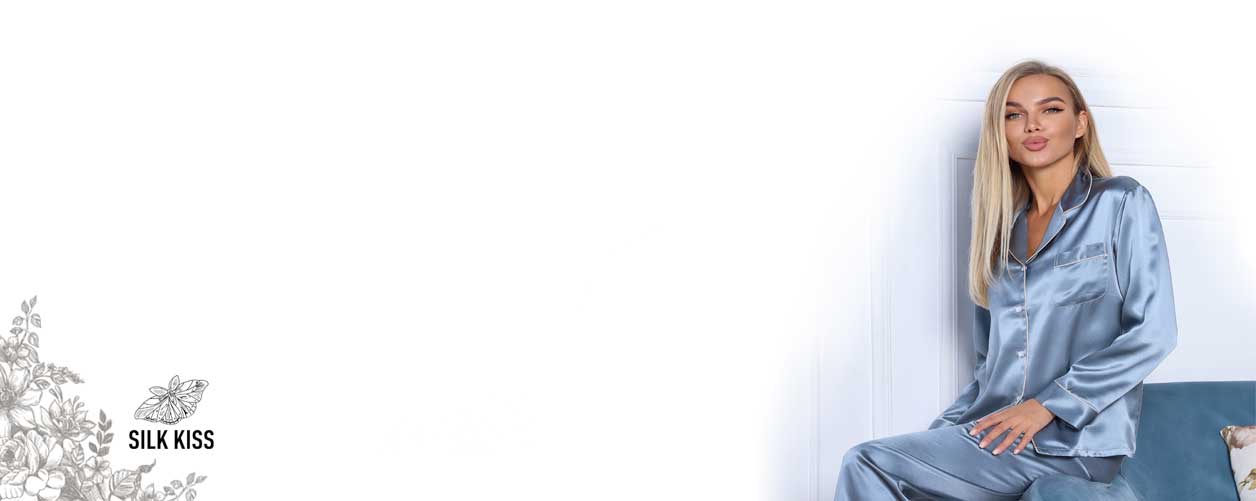
The unusual peach color has remained at the peak of popularity for several years now, not intending to give way. He is present in almost all collections of famous and novice couturiers, conquering the podium of all countries of the world. Dresses and blouses, suits and raincoats, bags and accessories - everything is subject to this color. And, of course, fashion designers of lingerie and home clothes could not ignore him. Especially if this color is represented by the most noble and luxurious material - natural silk.
Delicate shimmering peach-colored play on the sliding surface of the fabric emphasize romance and femininity, softness and grace, beauty and freshness. This is how the designers created the Madrid set, which consists of a silk shirt and a robe. The gorgeous brown lace and the same color piping work well with the pallor of the fabric. The flowing lines of the cut seductively emphasize all the advantages of the figure, leaving the feeling of some kind of hidden mystery.
The natural silk shirt and robe of the "Madrid" set are created for women who value comfort and beauty, coziness and peace of mind, the warmth of the hearth and the all-consuming power of love.
How to care for a silk product:
- wash by hand at a temperature not exceeding 30 ° C or in a washer on the “Delicate wash” / “Silk” mode;
- when washing, use gel for delicate fabrics, not washing powder;
- do not use bleach and fabric softener;
- do not twist or wring out the product, so as not to damage the structure of the fabric;
- after washing, blot with a towel, and then leave to dry unfolded on a horizontal surface;
- iron in the "Silk" mode without steam, but only after drying.
You need to store natural silk:
- in a dry, dark place, out of direct sunlight
- the place where the silk will be located should be well ventilated
- it is best not to store silk on the shelves, but hang it on a coat hanger
- try not to get deodorants or perfumes on the fabric, this can lead to stains
Silk bed linen should be stored in a closet, as well as other silk items. This is a very durable acquisition, and with proper care it can serve for years without losing its appearance and its useful properties.
Advantages of silk:
- This is a hyperallergenic material that is pleasant to the body and does not cause allergies or skin irritation
- Very durable material, high wear resistance, does not lose color and shape for decades
- Excellent thermoregulation of the material, retains heat in winter, and pleasantly cools the skin in summer. There is no such thermoregulation in any other fabric
- It has high hygroscopicity, which allows it to quickly absorb sweat and moisture and evaporate it just as quickly
- The high air permeability of silk allows your body to breathe
- Resistance to fire. Silk does not burn, but smolders
- Thermoregulation adjusts to your body temperature
- It rejuvenates the skin, stimulating the regeneration processes of the upper layers of the epidermis
- It has a positive effect on the condition of the hair
Silk does not electrify and stretches quite well and does not attract dust
It has bactericidal and disinfecting properties, prevents the reproduction of dust mites and other parasites, so it makes the best bed linen
No other fabric has such a combination of such amazing properties.
Silk is a truly royal fabric, the best of which does not exist. This is not fabric - this is real magic: useful, smooth, durable, delicate and elegant...
And you are worthy of pampering yourself with silk things!
How to distinguish natural silk from artificial?
We believe that this part of the article is very important, as many people ask this question.
- If you apply natural silk to your cheek, you will feel a feeling of warmth and smoothness, not roughness. By touching the front and back sides of the fabric, you can feel that: for real silk, these two sides are soft, while for synthetic silk, the wrong side is rough. Natural silk is cool at first, and then warms up from the skin.
- It is always worth looking at what is written about the composition of the fabric, on the label. It should have the inscription "100% natural silk".
- Silk "Armani" - is not silk, it is an ordinary synthetic with a beautiful name, be careful!
- Natural silk does not burn, it smolders, leaving lumps with the smell of a burnt feather, because. it is a natural material. With the addition of synthetics, the fabric burns and leaves plastic lumps that cannot or are difficult to crush with your fingers. And it will also have a strong synthetic smell of plastic.
- In natural silk, a piece of fabric is often attached for verification. Synthetics do not do this, for obvious reasons.
- Natural silk has a brighter luster than artificial silk.
- Natural silk does not creak when crushed
- Natural silk cannot be cheap, because it is obtained in a very difficult way.
- If you wrinkle a synthetic fabric for 10 seconds, then it will either not wrinkle or wrinkle with clear creases, while natural silk will wrinkle with soft creases.
Does natural silk become static?
Natural silk can become statically charged, but it does so much less than synthetic fabrics.
Why:
- Natural origin: Silk is a protein fiber produced by silkworms. It absorbs moisture well, which makes it less prone to accumulating static electricity, especially in humid environments.
- Environmental influence: In dry air (for example, during winter in heated indoor spaces), even natural silk can develop some static, especially when it rubs against other fabrics.
- Contact with other materials: If silk comes into contact with highly static-prone fabrics (like polyester or nylon), it can also become charged.
How to reduce static in silk:
- Use a humidifier to keep the air moist.
- Add anti-static spray or fabric softener when washing or ironing.
- Wear silk garments with cotton underwear to reduce friction with synthetic materials.
So yes, static buildup is possible, but overall, silk is one of the least static-prone fabrics.
No reviews found